Lavendar Haze
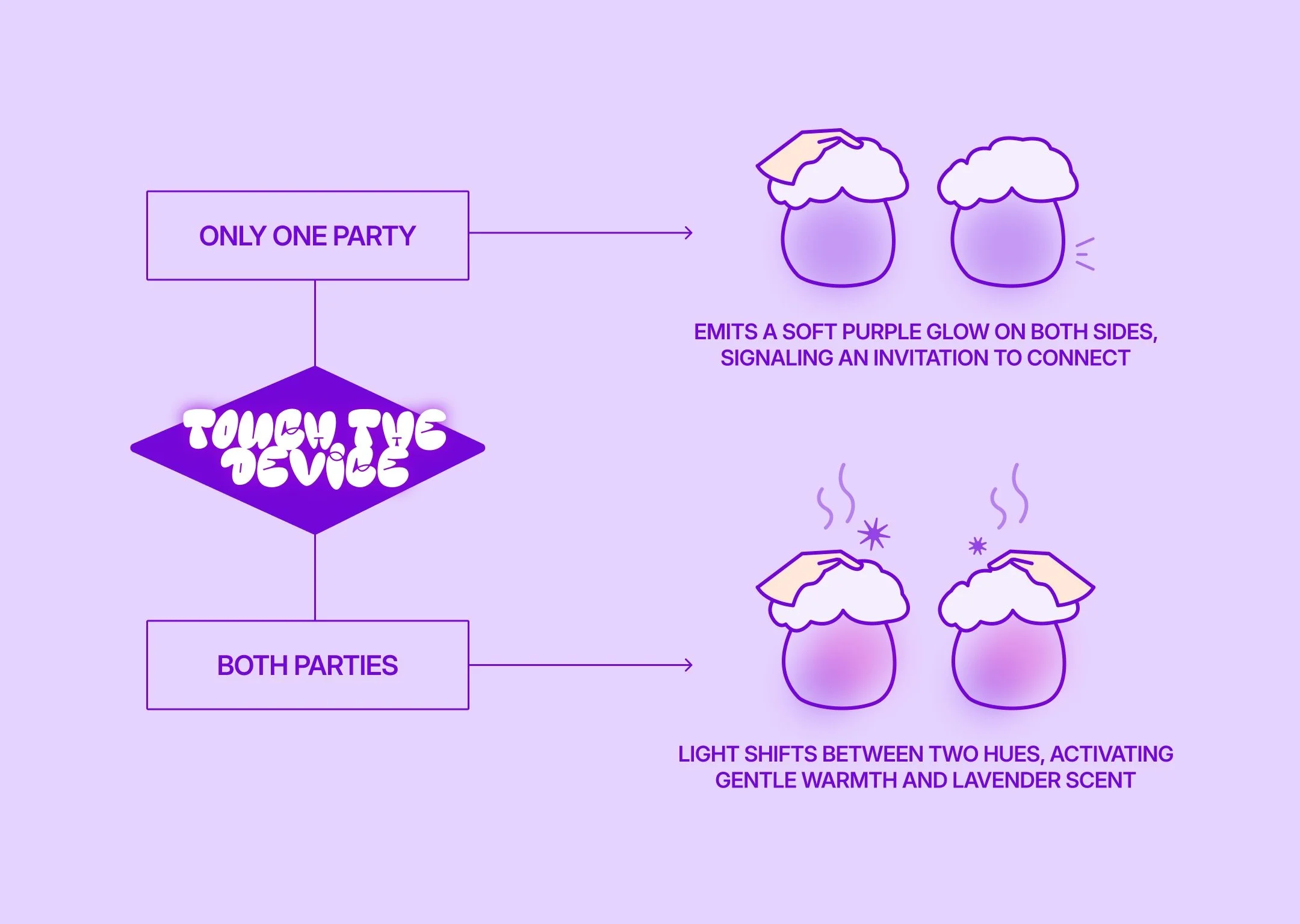
Lavender Haze is a networked tangible interaction device powered by the Particle Photon 2 and custom C++ firmware. Utilizing cloud-based "Publish/Subscribe" messaging, the system synchronizes two remote units in real-time. Each device integrates a Force Sensitive Resistor (FSR) for input, a NeoPixel Ring for visual feedback, and a heating element for olfactory actuation. The architecture employs boolean logic to differentiate between single-user "Presence" (ambient light) and synchronous "Connection" (active heat/scent), rigorously combining IoT connectivity with analog sensory
Tangible Telepresence
Internet of Things Course Work
Collaboration with Summer Chao
Completed Dec 2025
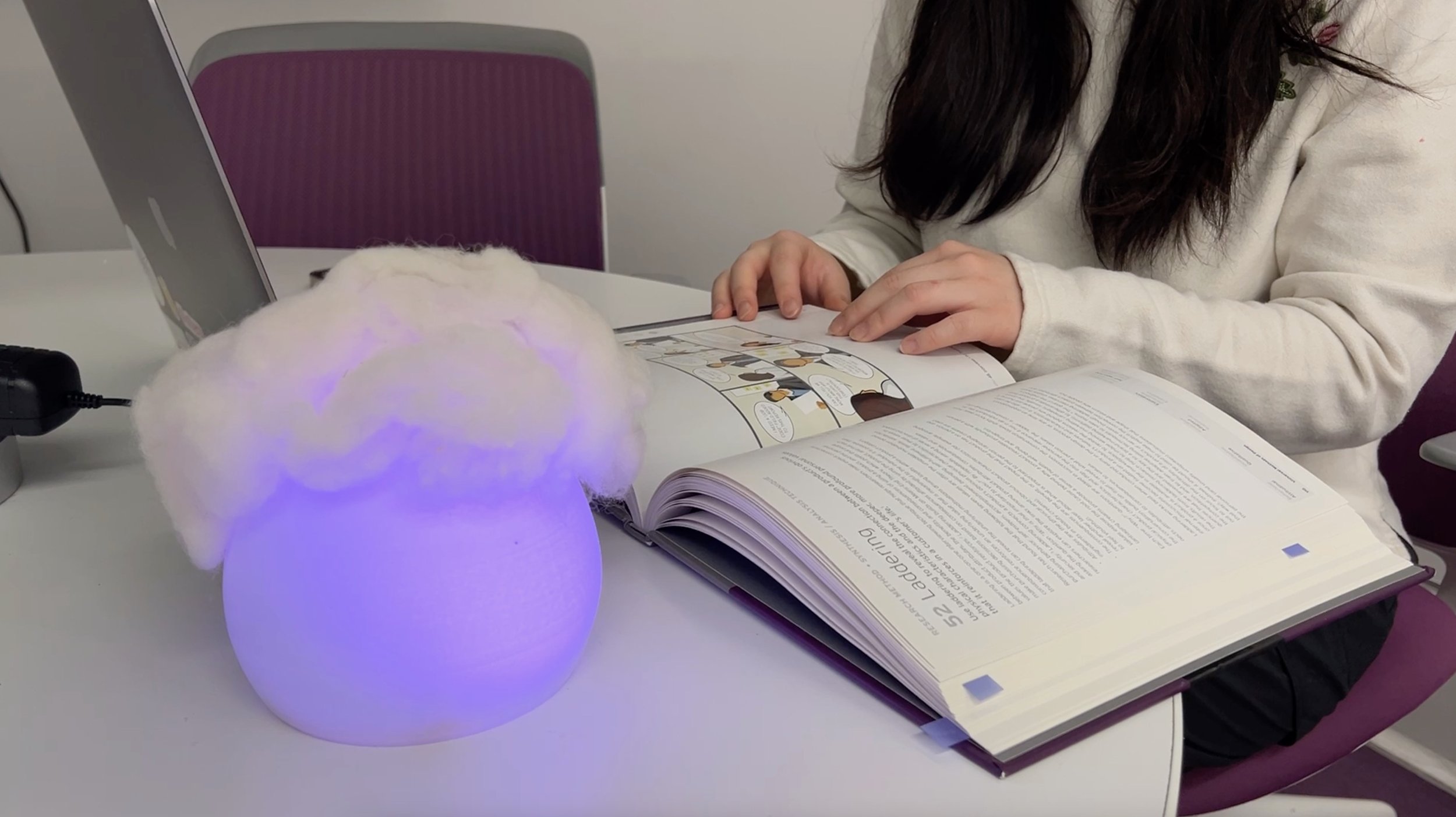
A soft, squeeze-sensitive bedside object that helps remote couples feel close through a gentle shared touch. When one partner holds the device, it glows with a soft purple light. When both partners touch their devices at the same time, the light grows brighter, and a hidden heating pad warms a small lavender wax core. As it melts, the wax leaves a light lavender scent on the hand, creating a quiet moment of warmth, connection, and presence across distance.
Process Video
Low-Fidelity Test
High-Fidelity & Integration
Fabrication & Outcome
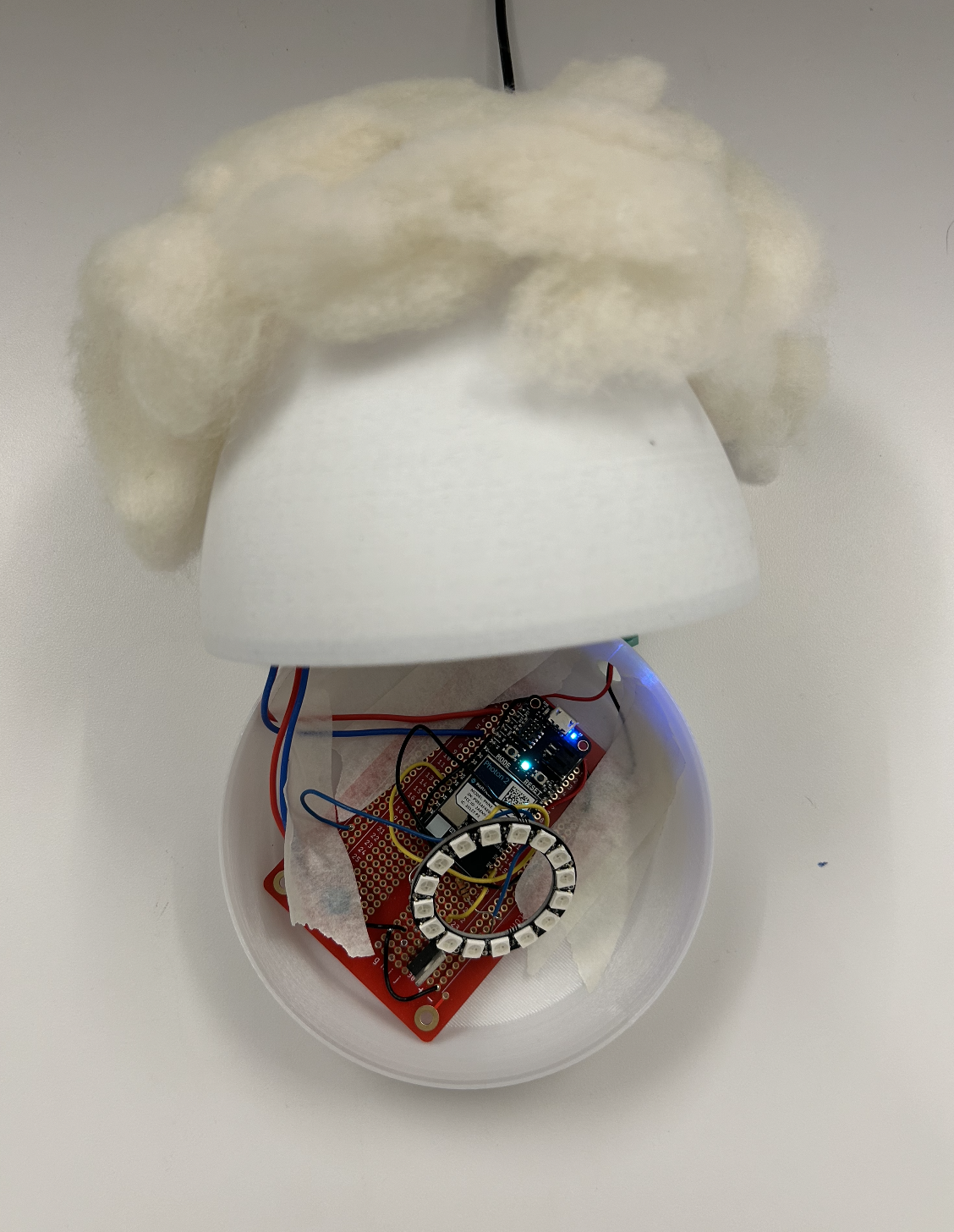
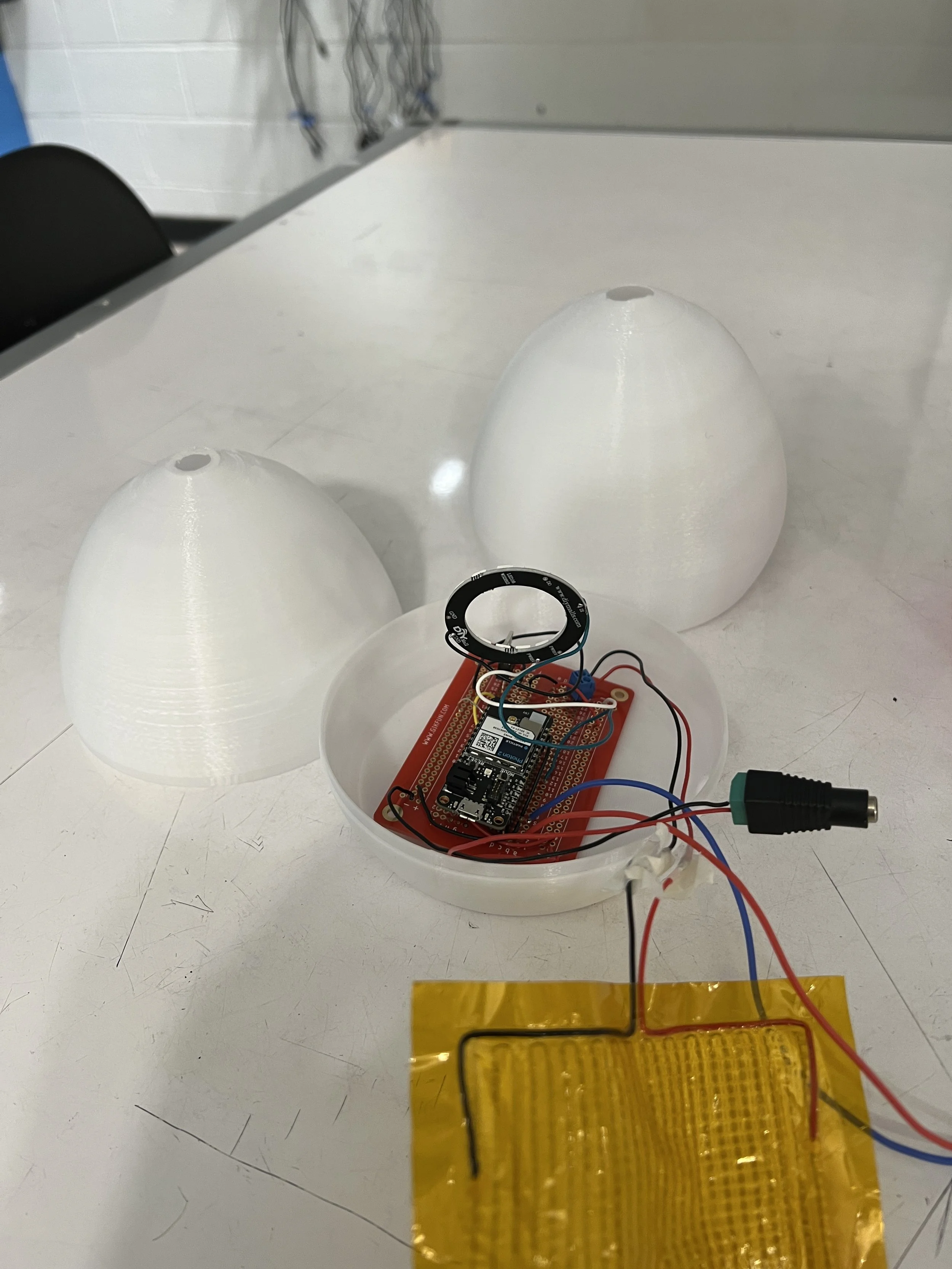
Hardware Architecture
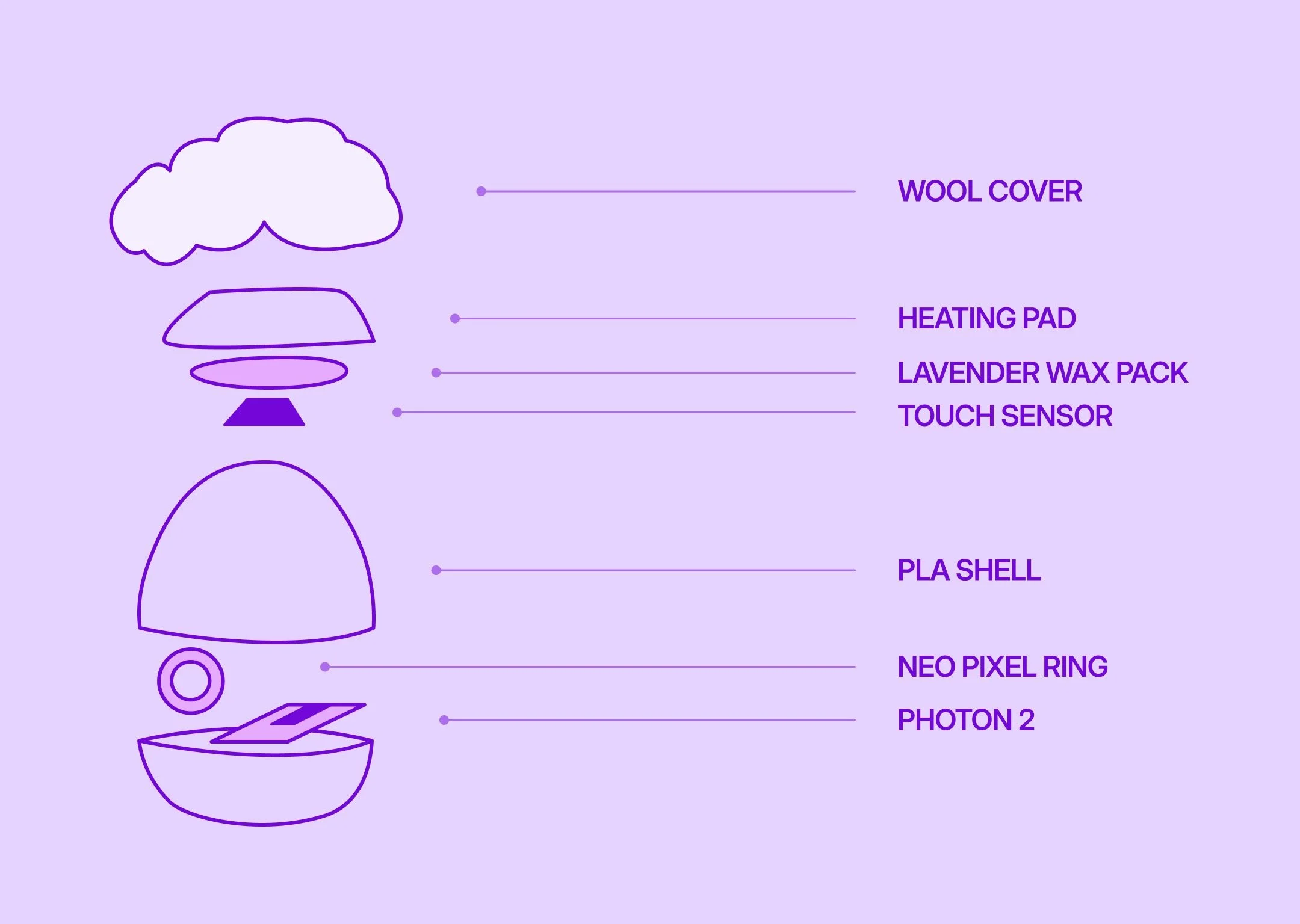
To achieve a rigorous technical implementation, I utilized the Particle Photon 2 WiFi development board. This choice was critical because the Photon’s cloud connectivity allows for the low-latency communication required for a real-time "hand-holding" simulation. The hardware stack includes:
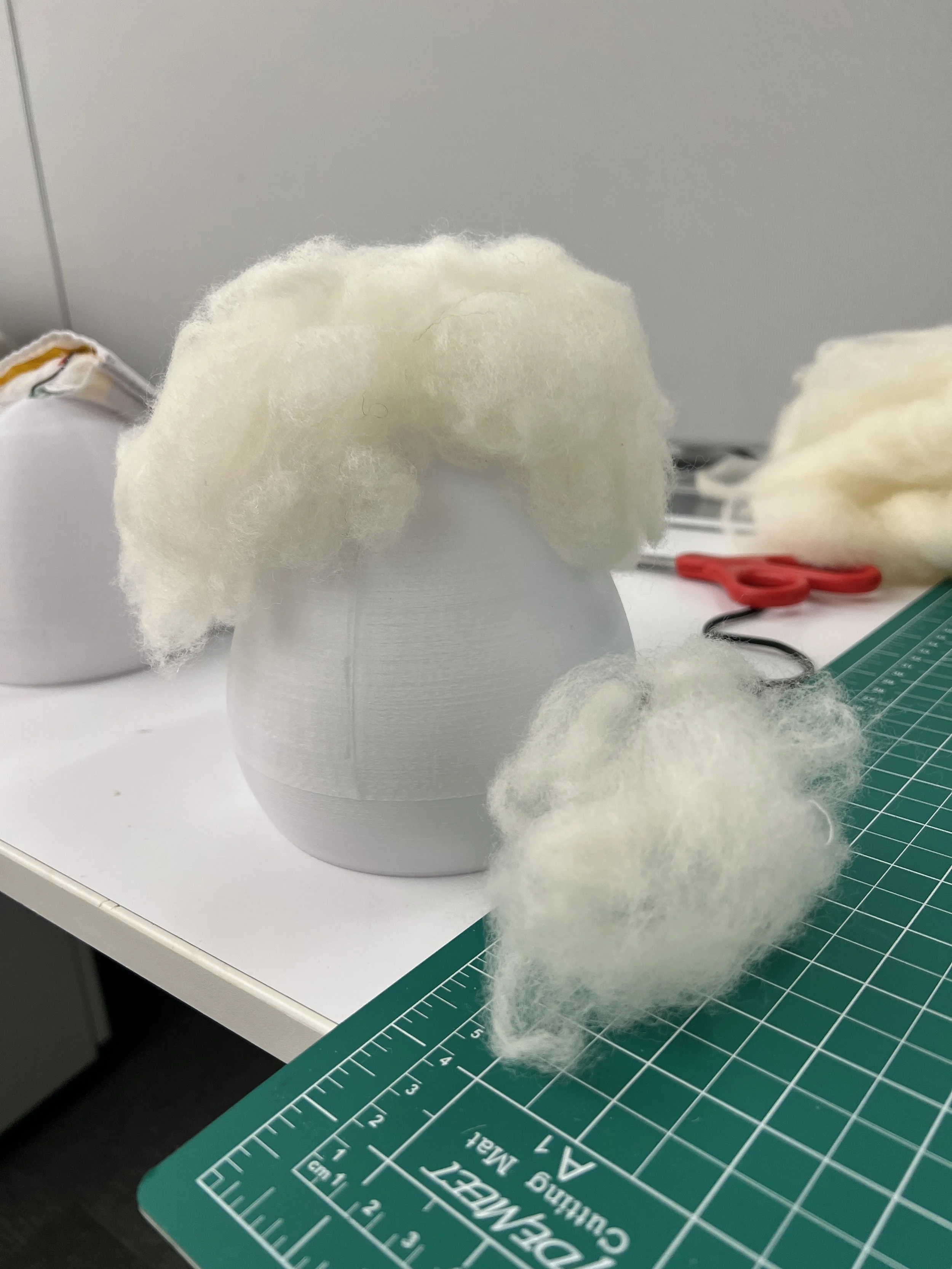
Input: A Force Sensitive Resistor (FSR 406) placed beneath the wool cover to detect the pressure of a hand.
Visual Output: A 16-LED NeoPixel Ring (WS2812B) providing ambient lighting.
Olfactory/Thermal Output: A Polyimide (Kapton) Flexible Heater Plate engaged to melt a lavender wax core.